Weather-Aware Surface Preparation
Surface Preparation in Austin Heat, Humidity, and Rain
Central Texas weather can change the condition of a prepared surface quickly. Better planning connects blasting, weather checks, protection, and coating application.
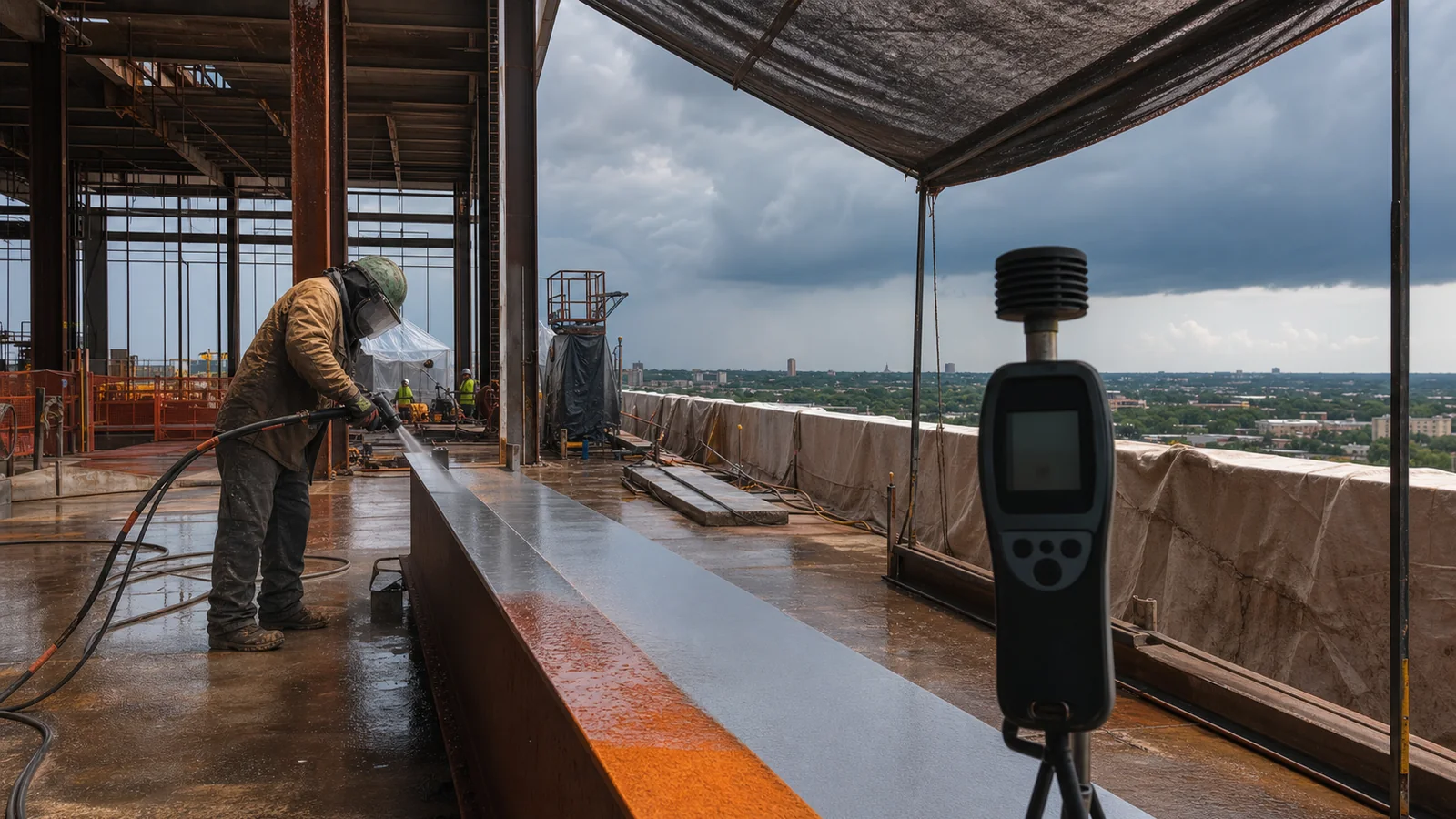
Summer heat does not tell the whole weather story in Central Texas. A clear Austin morning can become a humid afternoon, a pop-up storm can wet an exposed surface, and overnight cooling can bring condensation before anyone sees rain. For blasting and coating work, those changes matter because surface condition—not simply the forecast icon—affects the handoff.
Weather-aware preparation connects the substrate, removal method, exposure time, and coating manufacturer’s instructions. It does not create a universal “safe window.” Austin Mobile Surface Prep performs mobile dustless blasting and surface preparation in Austin and Central Texas, coordinating the prepared condition with the owner and coating installer rather than promising that one schedule fits every product or surface.
Why Central Texas Weather Changes the Plan
Heat, humidity, wind, cloud cover, and rain interact throughout the day. Air temperature reported for Austin may differ from conditions beside a sunlit steel tank, shaded railing, concrete slab, or enclosed work area. A dark metal surface can heat rapidly in direct sun, while a shaded surface may remain cooler and closer to the moisture conditions that permit condensation.
Rain introduces obvious moisture, but nearby storms can also change humidity, wind, and temperature before precipitation reaches the site. After a shower, standing water, damp cracks, porous concrete, and wet surroundings may extend the delay even when the surface looks dry from a distance.
For that reason, a project plan should identify what will be measured, who will make coating decisions, and how exposed prepared surfaces will be handled if conditions shift. The coating product data and installer’s procedures should define acceptance—not habit, the calendar, or a generic rule borrowed from another job.
Dew Point Is More Useful Than Humidity Alone
Relative humidity is important, but it does not by itself state whether moisture may condense on a surface. Dew point represents the temperature at which air becomes saturated under the measured conditions. If a substrate approaches that point, condensation risk increases even without rain.
Coating manufacturers commonly specify environmental limits and a required relationship between surface temperature and dew point. The exact criteria vary, so this article does not substitute a fixed margin. The installer should use appropriate instruments, current product documentation, and its quality-control process to decide whether application can begin or continue.
Measurements should reflect the work area and timing. Conditions can differ between sun and shade, at ground level and elevated steel, or between an open lot and a partially enclosed structure. Readings taken hours before coating may not describe the surface at application time. Responsibility for final environmental acceptance should be clear before blasting starts.
Heat Affects People, Equipment, Surfaces, and Coatings
High ambient temperature can shorten comfortable work periods and increase heat stress risk. Crews need a job-specific safety plan that may include hydration, acclimatization, shade, breaks, and schedule adjustments. Those controls are operational necessities, not reasons to rush surface preparation.
The substrate can also be much hotter than the surrounding air. Excessive surface temperature may affect coating mixing, flow, working time, adhesion, or cure behavior depending on the product. Conversely, postponing work until evening can create a different issue as surfaces cool toward dew point.
A common scheduling approach is to consider earlier work, shade, smaller phases, or a tighter preparation-to-coating sequence. None is automatically correct. Noise restrictions, site access, direct sun, substrate mass, crew capacity, and the specified coating window all influence the plan. Surface-temperature checks and installer approval remain more reliable than choosing a time solely because it feels cooler.
Humidity, Rain, and Flash Rust Need a Response Plan
Freshly prepared ferrous metal is reactive. When moisture and oxygen reach exposed steel, visible oxidation can develop rapidly; this is often called flash rust. Wet abrasive blasting uses water and can reduce airborne dust compared with dry blasting, but it is not dust-free and does not eliminate oxidation risk.
How quickly a surface changes depends on multiple factors, including the steel, salts or contamination, water quality, weather, exposure, and the preparation system. Rust inhibitors or other process controls may be compatible with some coating systems and unacceptable for others. They should not be added by assumption. The coating manufacturer and applicator need to approve materials that could remain on the substrate.
The team should agree in advance on the acceptable surface condition and what happens if flash rust exceeds it. Possible responses may include additional preparation, cleaning, drying, protection, or rescheduling, but the correct action belongs to the project specification and coating system. Covering a changed surface without evaluation can transfer a preparation issue into the finished coating.
Nonferrous metal, masonry, and concrete have different concerns. They do not flash rust like carbon steel, yet rain and humidity can leave moisture in pores, joints, and crevices. Product-specific moisture requirements still govern the handoff.
Schedule Preparation and Coating as One Sequence
The time between preparation and coating should be planned rather than treated as an empty gap. Define the daily production area according to how much the coating crew can inspect, accept, and cover under suitable conditions. Preparing more square footage is not helpful if it remains exposed beyond the project’s allowable window.
A useful pre-job conversation covers:
- Substrate type, existing coating, contamination, and required preparation outcome
- Forecast monitoring and on-site environmental measurements
- Who records air temperature, surface temperature, humidity, and dew point
- The coating product’s limits, recoat logic, and installer availability
- Protection from rain, condensation, dust, traffic, and other trades
- Acceptance criteria for flash rust or other surface changes
- Stop-work, reinspection, and repreparation decisions
Temporary cover may help on some sites, but it can also trap humidity, restrict ventilation, or create safety and access issues. It should be designed for the work rather than assumed to make outdoor conditions irrelevant.
Create a Practical Austin Weather Contingency
Forecasts support planning; they do not guarantee site conditions. Build decision points into mobilization, production, and handoff. A crew may confirm conditions at startup, reassess when clouds or wind arrive, and pause before preparing another section if the coating team cannot keep pace.
Photographs and scope details improve planning. Include views of sun exposure, access, rust or coating failure, and sheltered or low-lying areas where moisture persists. Identify whether the surface is steel, aluminum, concrete, masonry, or another material, and note who will apply the next coating.
For an Austin or Central Texas project, call Austin Mobile Surface Prep at 512-592-1288. Send photos, project location, approximate surface size, and desired timeline, along with the planned coating system or applicator contact if available. The team can discuss access, test areas, weather exposure, and a practical preparation-to-coating handoff without making unsupported weather or performance guarantees.
Frequently Asked Questions
Is a hot, sunny day always good for surface preparation?
No. Dry weather may be helpful, but direct sun can make a substrate much hotter than the air and potentially move it outside a coating product’s application limits. Conditions should be measured at the surface and evaluated by the coating installer.
Does high humidity automatically stop blasting?
Not in every situation. The substrate, preparation method, dew point, specification, and next coating all matter. High humidity can narrow the available window or increase condensation and flash-rust concerns, so the project team should follow product-specific limits and on-site readings.
Can wet abrasive blasting prevent flash rust?
No universal prevention claim is appropriate. Wet abrasive blasting can reduce airborne dust, but freshly exposed ferrous metal may oxidize when moisture and oxygen are present. Process choices and acceptance criteria must be coordinated with the coating system and applicator.
What happens if rain arrives after preparation?
Protect the area when safely practical, stop work as required, and have the prepared surface reinspected after the event. Depending on the substrate, contamination, visible change, and coating requirements, cleaning, drying, or additional preparation may be needed before the installer accepts it.
Related Austin surface prep guides
Want a project-specific answer?
Send photos, the Austin-area location, approximate size, existing coating or buildup, desired finish, and timeline. We will help determine whether mobile wet abrasive blasting is the right fit.
Text Photos to (512) 592-1288