Planning and Estimates
Dustless Blasting Cost in Austin: What Shapes an Honest Quote
A useful blasting quote begins with the surface, coating, access, containment, cleanup, and schedule—not a generic square-foot assumption.
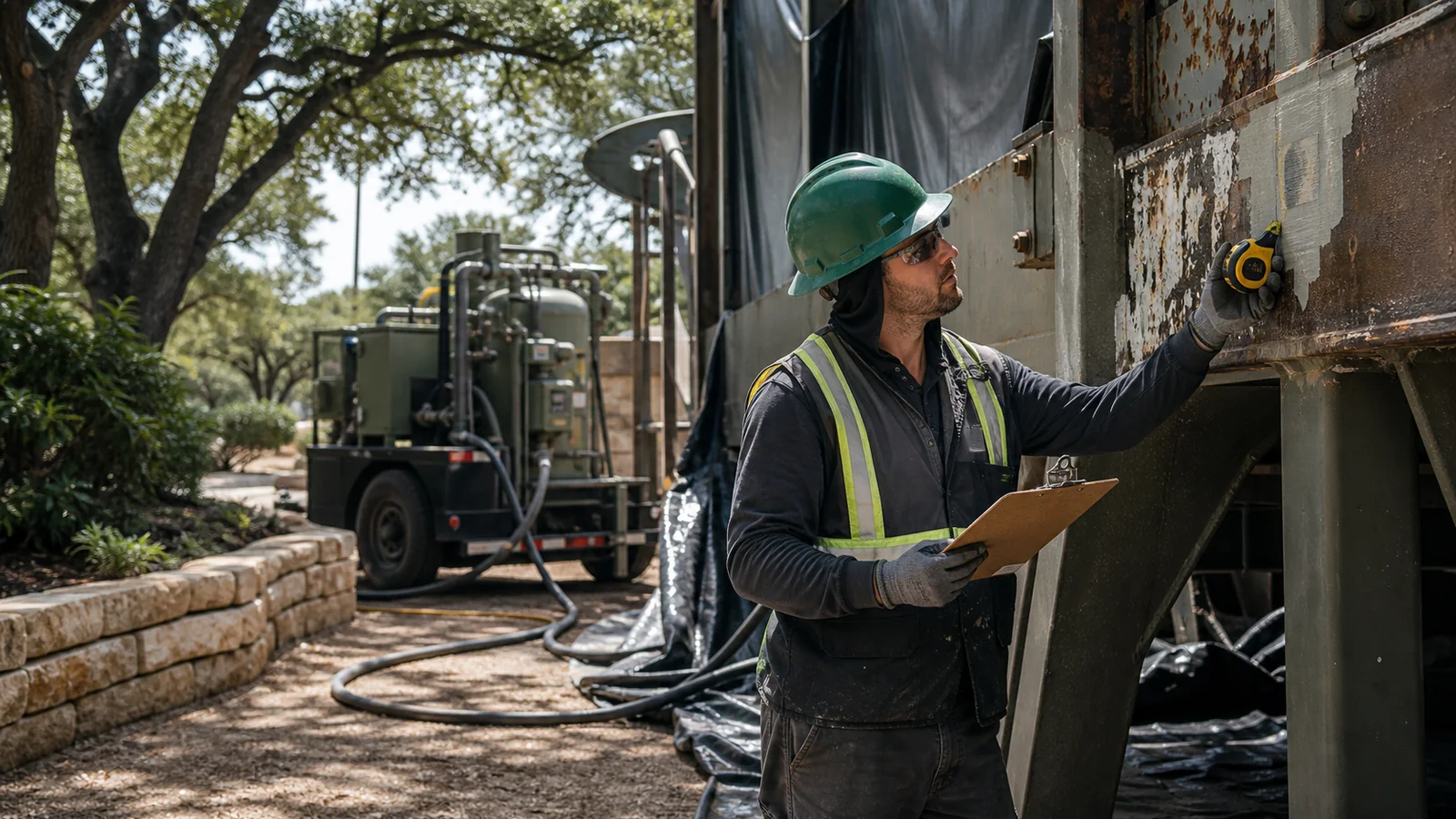
If you are researching dustless blasting cost in Austin, the most useful answer is not a generic number. Two objects with similar dimensions can require very different amounts of labor, media, water management, masking, cleanup, and equipment movement. An honest quote should define what will be removed, what condition the substrate is in, what finish the next coating needs, and what jobsite constraints affect the work.
“Dustless” blasting commonly refers to wet abrasive blasting. Adding water reduces airborne dust compared with dry blasting, but the process is not dust-free. Spent media, coating debris, and water still need to be controlled. Those realities belong in the project scope and can materially affect an Austin estimate.
What an Austin Blasting Quote Should Actually Cover
A clear quote should identify the item or area being prepared, the approximate dimensions, the substrate, and the coating or contamination to be removed. It should also state the intended stopping point. Removing loose paint is a different scope from stripping a multilayer system to sound bare metal. Cleaning oxidation is different from producing a specified profile for a new coating.
Look for clarity about mobilization, blasting, masking, containment, debris collection, and cleanup. Ask whether moving small objects, protecting nearby glass, or working around attached hardware is included. If the surface will be handed to another contractor, define who inspects it and who is responsible for final cleaning, drying, priming, or protecting it from flash rust.
A quote becomes more useful when exclusions are visible. Unknown hazardous coatings, concealed corrosion, inaccessible back sides, repairs, and coating application should not quietly be assumed. A lower total with an unclear scope is difficult to compare with a more complete proposal.
Surface, Coating, and Finish Requirements Drive the Work
The substrate limits how aggressively a technician can work. Heavy steel, thin sheet metal, masonry, wood, and fiberglass do not respond the same way. The media, pressure, nozzle distance, angle, and dwell time must suit both the material and the desired result.
Coating history matters too. A single weathered layer may release differently than several generations of paint, filler, sealant, or elastomeric material. Rust scale, grease, calcium deposits, and chemical residues introduce separate preparation needs. Photos can reveal broad conditions, but they may not show adhesion, hidden layers, or deep pitting.
The next finish is equally important. A surface being prepared for industrial coating may need a different profile than decorative masonry or a delicate component. Tell the estimator what happens after blasting. “Make it clean” is less actionable than naming the substrate, the material to remove, and the coating or finish that follows.
Why Test Patches Improve Scope and Expectations
A test patch is a small, controlled trial used to see how the coating releases and how the substrate responds. It can help confirm media choice, pressure, production rate, surface appearance, and whether additional coating layers are hidden underneath. On sensitive or unfamiliar materials, testing may be the responsible step before committing to the full area.
Testing is not a promise that every section will behave identically. Coating thickness, corrosion, repairs, and sun exposure can vary across the same object. Still, a representative patch gives the owner and contractor better information than dimensions alone.
When requesting a quote, ask whether a test patch is recommended and how it affects scheduling. The test location should be agreed upon, especially on visible architectural surfaces. If the final appearance matters, evaluate the dry surface rather than relying only on how it looks while wet.
Access, Containment, and Cleanup Change the Job Plan
Austin projects range from open residential driveways to tight downtown service areas and active commercial sites. Equipment parking, hose routing, stairs, gates, overhead clearance, traffic, and distance from the work area all affect setup and movement. Limited access may require a different sequence even when the blasting area is modest.
Containment should reflect the coating debris, neighboring property, drains, landscaping, vehicles, pedestrians, and wind exposure. Wet abrasive blasting reduces airborne dust, but rebound and slurry still travel. Masking adjacent surfaces, protecting drains, laying ground cover, and collecting spent material take time and supplies.
Tell the estimator about HOA rules, loading restrictions, site orientation, water availability, and operating-hour limits. Also flag coatings of unknown age. Suspected lead or other regulated materials require identification and an appropriate work plan; they should not be treated as ordinary paint debris.
Downtime, Sequencing, and Weather Affect the Quote
The least disruptive plan is not always the fastest blasting pass. A restaurant, fleet yard, fabrication shop, or multifamily property may need work divided into phases so essential access remains open. Repeated setup and teardown can change labor compared with one continuous work window.
Austin heat, wind, rain chances, and rapidly drying steel can influence timing. On metal, the interval between blasting and primer matters because clean steel can oxidize quickly, especially when moisture is present. Coordinate the blasting crew and coating contractor before work begins rather than leaving a prepared surface exposed while schedules are settled.
Discuss noise-sensitive hours, tenant notices, vehicle relocation, cure windows, and the time needed for inspection. “Downtime” should include containment setup, cleanup, surface acceptance, and the next trade—not just the period when the nozzle is operating.
Information That Helps Produce a Better Estimate
Start with wide photos showing the whole work area, then add close-ups of peeling, rust, corners, welds, seams, and representative coating layers. Include an object for scale or provide measurements. For irregular equipment, dimensions of the main sections are more helpful than a rough guess at total square footage.
Share the Austin-area location, substrate, known coating history, desired stopping point, next coating, site access, nearby sensitive areas, and preferred timeline. Mention whether the item can be moved and whether work must occur while the property remains operational. If another contractor is managing repairs or paint, provide that handoff requirement early.
Austin Mobile Surface Prep can review photos and scope details before discussing a site visit or test patch. Send the project location, approximate size, surface and coating information, access notes, and target timeline, or call 512-592-1288. A detailed request helps the quote reflect the real job instead of a generic assumption.
FAQ About Dustless Blasting Quotes in Austin
Can I get an exact quote from photos alone?
Photos and measurements may support an initial assessment, but coating adhesion, hidden layers, substrate damage, access, and containment needs can require an on-site review or test patch. The estimator should explain what is confirmed and what remains conditional.
Is dustless blasting completely dust-free?
No. Wet abrasive blasting suppresses much of the airborne dust associated with dry blasting, but it still creates rebound, spent media, coating debris, and wet slurry. Appropriate containment and cleanup remain part of responsible planning.
Does square footage determine the total cost?
Area is one input, not the whole estimate. Coating thickness, substrate sensitivity, geometry, access, masking, debris handling, finish requirements, and work windows can be equally important. Complex edges and attached hardware can take longer than broad open surfaces.
What should I compare between competing quotes?
Compare the defined surface, removal endpoint, test assumptions, masking, containment, cleanup, access plan, schedule, exclusions, and handoff condition. Ask how unknown coating layers or concealed damage will be handled. Comparable scope matters more than comparing totals without context.
Related Austin surface prep guides
Want a project-specific answer?
Send photos, the Austin-area location, approximate size, existing coating or buildup, desired finish, and timeline. We will help determine whether mobile wet abrasive blasting is the right fit.
Text Photos to (512) 592-1288